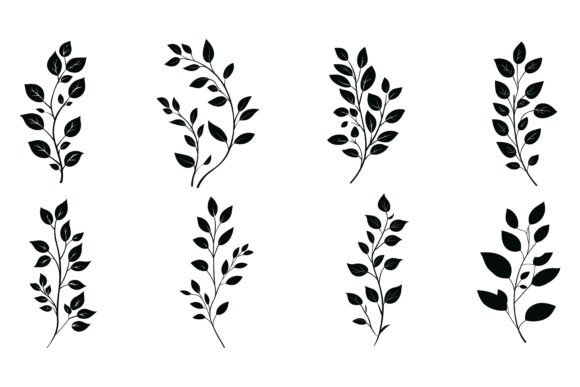
Decorative Art Branches with Leaves: A Practical Design Resource for Modern Creative Workflows
Decorative art branches with leaves have become a staple element in visual design, appearing across branding materials, editorial layouts, digital interfaces, and printed collateral. These organic, nature-inspired illustrations bring warmth, movement, and a sense of growth to compositions that might otherwise feel static or overly rigid. When sourced as professionally crafted AI EPS illustration sets, they offer more than just aesthetic appeal — they become flexible, editable assets that integrate directly into established design processes without disrupting momentum or forcing compromises on quality.
What distinguishes a well-produced collection of decorative branches from generic clip art is the attention to file structure, editability, and cross-platform compatibility. Designers working under real deadlines understand that an illustration is only as useful as its layer organization allows it to be. A flattened, uneditable file creates friction. A neatly organized AI and EPS file with clearly named layers and grouped elements reduces the time between concept and final output, which is precisely where the value of a specialized illustration set becomes tangible.
Understanding the Role of Botanical Illustration Assets in Creative Projects
Decorative art branches with leaves serve a functional role that extends beyond decoration. In branding projects, they can soften a corporate identity or add an organic counterpoint to geometric logo marks. In editorial design, they frame content, guide the reader's eye, and create visual hierarchy without competing with the message. In web and app interfaces, scaled-down leaf motifs and branch elements act as subtle navigational cues, section dividers, or background textures that enhance user experience without overwhelming it.
The versatility of these assets means they appear in a wide range of deliverables. A single well-designed branch illustration might be used as a hero element on a landing page, repurposed as a social media post graphic, adapted for printed stationery, and even incorporated into packaging design — all from the same source file. This kind of multi-purpose utility is what makes organized, editable vector files particularly valuable to small business owners, freelancers, and in-house design teams who need to stretch resources across multiple channels.
Where Decorative Branch Illustrations Fit in the Project Lifecycle
Understanding when and how to introduce botanical illustration assets into a workflow can affect both efficiency and creative outcomes. These elements are rarely the starting point of a project, but they often play a pivotal role during the refinement and polish stages.
Pre-Project Planning and Asset Preparation
Before a project begins in earnest, having a curated library of decorative art branches with leaves on hand changes the planning conversation. Instead of wondering whether a nature-inspired direction is feasible within budget and timeline constraints, teams can explore existing assets, test placements, and make informed decisions early. This pre-visualization capability helps stakeholders align on a visual direction before committing significant resources to custom illustration work that may or may not resonate.
During the preparation phase, compatibility considerations come into play. The fact that a properly formatted EPS or AI file works across both Mac and Windows environments eliminates a common friction point in collaborative settings where team members use different operating systems. File format decisions made early prevent the kind of mid-project technical issues that derail schedules and frustrate contributors.
Active Design and Iteration
In the thick of a design project, speed and flexibility matter. Decorative branch illustrations that arrive with clean layer structures allow designers to isolate individual leaves, adjust stem curves, recolor elements, and scale components independently — all without reconstructing artwork from scratch. This is where the distinction between a generic download and a thoughtfully prepared illustration set becomes most apparent.
Color editing capabilities deserve particular attention. Brand color palettes vary widely, and an illustration that ships only in predetermined hues forces designers into workarounds. When the source files support easy color modification — whether through global swatches, well-organized layer styles, or simple selection-based adjustments — the same branch illustration can adapt to a luxury brand's muted earth tones one week and a children's product line's bright palette the next. This adaptability makes the asset earn its place in a production environment repeatedly, rather than sitting unused after a single project.
Post-Production and Handoff
After the core design work is complete, decorative elements often need to be prepared for multiple output formats. A branch illustration destined for print requires different handling than one headed for a responsive website or a mobile app icon set. High-quality AI and EPS files with sufficient detail and clean construction scale gracefully between these contexts. The inclusion of companion JPG files in some illustration sets provides quick-access raster versions for situations where vector precision is unnecessary, such as placeholder images in wireframes or internal presentations.
Practical Integration with Common Design Tools and Platforms
Decorative art branches with leaves do not exist in isolation. They interact with the broader ecosystem of design software, productivity tools, and publishing platforms that creative professionals rely on daily.
In Adobe Illustrator, native AI files open with full editability, preserving every path, anchor point, and gradient. This allows seamless integration into existing artboards and project files without the need for import conversions that can introduce errors. For teams that work across Adobe Creative Cloud, an Illustrator file can be linked into InDesign layouts for print projects, imported into After Effects for motion graphics, or placed into Photoshop compositions — all while maintaining a connection to the original editable vector source when smart objects and linked assets are used properly.
EPS files offer broader compatibility with non-Adobe tools, including CorelDRAW, Affinity Designer, and various open-source vector editors. This format choice matters for freelancers who collaborate with clients using different software stacks, as well as for educators teaching design fundamentals in environments where software access varies. A well-constructed EPS preserves the essential vector data and, when opened in compatible applications, maintains the integrity of the original artwork.
For web-focused workflows, vector illustrations can be exported as SVG files for direct use in HTML and CSS, or converted to icon font glyphs when the decorative branches include symbol-like elements suitable for smaller scales. The consistency and detail quality of the source artwork directly impacts how well these conversions perform — poorly constructed vectors produce SVG files with unnecessary complexity and larger file sizes, while cleanly built illustrations result in efficient, fast-loading web graphics.
Organizational Practices That Maximize Asset Value
How a designer manages illustration assets over time determines whether they remain useful or become digital clutter. Decorative art branches with leaves benefit from the same organizational discipline applied to photography collections, font libraries, and template files.
Creating a folder structure that separates raw source files from project-specific adaptations prevents accidental overwrites and preserves the original editable state. Naming conventions that include descriptive terms — such as the style, season, predominant plant type, or file format — make assets searchable months after initial download. Tagging systems within operating systems or digital asset management tools add another layer of findability, especially when a collection grows to include dozens of botanical illustration sets.
Version control matters as well. When a designer customizes a branch illustration for a specific project — recoloring it, combining it with other elements, or simplifying it for a particular use case — saving that variant as a distinct file with clear naming prevents confusion about which version represents the master. This discipline pays off when the same illustration is reused across multiple client projects or when team members need to locate the definitive version of an asset.
Quality Indicators That Affect Real-World Usability
Not all decorative branch illustration sets deliver the same level of practical value. Several quality indicators separate assets that integrate smoothly into professional workflows from those that create extra work.
Perfection in details and consistency across an illustration set matters for two reasons. First, inconsistent line weights, mismatched style treatments, or varying levels of complexity within the same collection force designers to spend time correcting artwork instead of applying it. Second, when multiple illustrations from the same set appear together in a single layout — as they often do in multi-page documents, website designs, or branded collateral — inconsistencies become visibly apparent to viewers, even if they cannot articulate what feels off. A cohesive set maintains the same visual language across every element, which preserves design integrity even when pieces are used in combination.
Layer structure quality directly correlates with editing speed. Illustrations organized into logical groups — such as separating foreground leaves from background branches, or grouping by natural component rather than arbitrary selection — allow rapid isolation and adjustment of specific elements. A designer who needs to change the color of only the leaf elements without affecting the branch structure can do so in seconds when layers are thoughtfully arranged. When layers are flat or chaotically organized, the same task becomes a tedious manual selection exercise that eats into billable time.
Use Cases Across Professional Contexts
The application range for decorative art branches with leaves spans far more contexts than many users initially recognize. Exploring these use cases reveals how the same asset can serve different purposes depending on the project type and medium.
For marketers and small business owners, these illustrations enhance social media graphics, email newsletter headers, promotional flyers, and product packaging concepts. The ability to quickly recolor botanical elements to match seasonal campaigns — warm autumn tones for fall promotions, fresh greens for spring launches — extends the usable life of a single illustration set across an entire year of marketing activities.
Educators and content creators use branch and leaf illustrations to add visual interest to presentation slides, worksheets, course materials, and digital products. The natural, calming aesthetic of botanical artwork suits educational environments without distracting from instructional content. When these illustrations are formatted for both print and screen use, the same assets work across handouts distributed in physical classrooms and resources shared in online learning platforms.
App and web designers incorporate scaled-down decorative branches into user interfaces as subtle branding elements, loading screen graphics, or empty state illustrations. The consistency of a well-crafted set ensures that these interface details feel intentionally designed rather than randomly assembled, which contributes to the overall perception of product quality.
Infographic designers find particular value in botanical vector elements. Branches and leaves can represent growth metrics, environmental themes, branching decision paths, or seasonal data — transforming abstract numbers into visually intuitive narratives without resorting to generic chart templates that audiences have seen countless times before.
Making the Decision to Add Decorative Branch Assets to a Creative Toolkit
Choosing to invest in a specialized illustration set involves practical considerations beyond the immediate appeal of the artwork. The file formats included — AI, EPS, and JPG — cover different workflow needs, with vector formats providing editability and scalability while raster formats offer quick preview and placement options. Cross-platform compatibility between Mac and Windows environments ensures the assets remain accessible regardless of hardware or operating system preferences among team members.
The long-term value of decorative art branches with leaves depends on how readily they can be adapted to changing project requirements. An illustration set purchased for one specific use often finds its way into subsequent projects when the files are easy to locate, simple to modify, and reliable in output. This cumulative utility makes the initial selection process worth the attention it demands — evaluating not just whether the artwork looks appealing today, but whether the file construction and organization will support efficient editing tomorrow, next month, and across an unpredictable range of future projects.
For professionals who regularly produce visual content, having a dependable collection of botanical vector illustrations reduces the temptation to over-rely on the same limited set of decorative elements, which can lead to portfolio sameness. Fresh assets with flexible editability encourage experimentation within established brand constraints, which keeps creative output feeling current without requiring a complete stylistic overhaul for each new initiative.