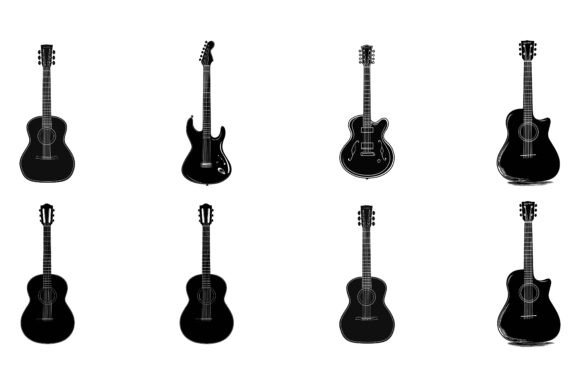
Collection of Music and Tool: A Practical Resource for Modern Visual Projects
Every creative project starts with a gap between what you envision and what you have on hand. The Collection of Music and Tool bridges that gap by offering a curated set of AI EPS illustrations designed to slot directly into your existing workflow. Whether you are assembling marketing materials, building an app interface, or preparing assets for a client presentation, having a reliable visual library reduces friction and keeps your attention where it belongs—on the bigger picture.
What sets this particular collection apart is not just the subject matter, but the way it has been constructed. Music and tool-themed illustrations carry a dual appeal. They speak to creative professionals who work with sound, and they resonate with makers, builders, and anyone whose work involves physical or digital craftsmanship. The thematic overlap gives you flexibility. A single icon of a wrench shaped like a guitar pick can serve a music blog, a repair service, or a productivity app equally well. Understanding how to deploy these assets effectively is what turns a simple purchase into a long-term resource.
What the Collection Includes and How It Is Structured
Before diving into use cases, it helps to know exactly what you are working with. The Collection of Music and Tool arrives as a downloadable package containing AI, EPS, and JPG files. Each format serves a distinct purpose in a professional pipeline, and having all three from the start eliminates the need to convert or export assets before you can begin.
- AI (Adobe Illustrator) — The native vector format, preserving full editability, layers, and scalable paths.
- EPS (Encapsulated PostScript) — A universal vector format compatible with older software and non-Adobe environments.
- JPG (Raster preview) — A ready-to-use image for quick placement, mockups, or sharing with collaborators who do not need source files.
The files are organized with a clear folder and layer structure, which means you can locate a specific guitar icon or a particular tool symbol without scrolling through a single monolithic document. For anyone who has wasted time hunting through poorly named layers, this alone is a meaningful efficiency gain. The structure has been designed for both Mac and Windows users, so cross-platform teams do not face compatibility hurdles when handing off files between departments or freelancers.
Where the Collection Fits in a Creative Workflow
Most visual projects move through distinct phases: planning, rough composition, refinement, and final output. The Collection of Music and Tool can enter at any of these stages, and how you use it depends on your specific context.
Early-Stage Planning and Concept Development
During the planning phase, you often need placeholder visuals to communicate ideas to stakeholders or team members. Instead of sketching from scratch or using generic shapes, you can pull JPG previews from the collection to populate wireframes, slide decks, or mood boards. The thematic clarity of music and tool imagery helps non-designers grasp the intended tone immediately—far more effectively than a box with an X through it. This speeds up approval cycles and reduces the back-and-forth that comes from misaligned expectations.
Mid-Project Production and Refinement
Once a direction is approved, the editable AI and EPS files become the real workhorses. Because the illustrations are vector-based, you can scale them to any size without quality loss. This is essential when an asset needs to appear on both a business card and a trade show banner within the same campaign. The neatly organized layer structure means you can isolate individual elements, adjust stroke weights, or recolor sections without affecting the rest of the composition. If your brand palette shifts mid-project—an annoyingly common occurrence—you can update every icon in minutes rather than hours.
Final Output and Multi-Format Delivery
When a project wraps, deliverables often span multiple formats. A single illustration might need to exist as a crisp vector in a printed brochure, an optimized PNG on a website, and a simplified symbol in an app navigation bar. The collection's suitability for print, web, symbols, apps, and infographics means you are not scrambling to recreate or re-export assets at the last moment. The work you do once in the AI file carries through to every output channel.
Practical Editing and Customization
One of the most frequently cited frustrations with pre-made illustration sets is rigidity—assets that look great in previews but resist modification when you actually need to tailor them. This collection was built with editability as a core feature. You can change colors, modify icon shapes, adjust proportions, and adapt details to match your specific requirements. For someone who needs a drum kit icon but wants the kick drum to match a particular product color, the process is straightforward: open the AI file, select the relevant layer, and apply the desired fill or gradient.
The perfection in details and consistency mentioned in the product description matters here because it establishes a baseline of quality. When every icon in a set follows the same stroke width, corner radius, and visual density, the modifications you make feel intentional rather than patchwork. Consistency also reduces the cognitive load of editing. Once you learn how one illustration is constructed—its grouping logic, its naming conventions—you effectively understand the entire library. This predictability is valuable when you are working against a deadline and cannot afford to reverse-engineer someone else's design decisions.
Integration with Other Tools and Platforms
No design asset exists in isolation. The Collection of Music and Tool interacts with a broad ecosystem of software, platforms, and production methods. Understanding these touchpoints helps you maximize the value of what you have purchased.
- Adobe Creative Suite — AI and EPS files open natively in Illustrator, and can be imported into Photoshop, InDesign, After Effects, and Premiere Pro. Vector smart objects retain scalability and editability.
- Affinity Designer and CorelDRAW — EPS support ensures compatibility with these popular alternatives, broadening the user base beyond Adobe-centric workflows.
- Figma and Sketch — While these UI-focused tools do not directly edit AI files, you can export SVGs from Illustrator or copy-paste vector paths. The organized layer structure makes this transfer cleaner.
- Web and app development — Icons can be exported as SVG code, PNG sprites, or icon font glyphs. The consistency of the set ensures a cohesive visual language across an entire interface.
- Presentation software — High-resolution JPGs or exported PNGs drop directly into PowerPoint, Keynote, or Google Slides for pitch decks and training materials.
This interoperability means the collection functions less like a static product and more like a component in a larger system. You are not locked into a single piece of software or a specific output medium, which protects your investment as your toolchain evolves over time.
Use Cases That Extend Beyond the Obvious
At first glance, music and tool illustrations seem to serve fairly narrow niches: recording studios, hardware stores, DIY blogs. But the practical applications are broader than they appear. The key is recognizing the metaphorical power of these visuals.
Music as a Universal Metaphor
Music-themed icons—notes, headphones, equalizers, instruments—can represent harmony, rhythm, mood, communication, and emotional resonance. A productivity app might use a metronome icon to suggest steady progress. An educational platform could use sheet music to indicate structured learning paths. A wellness brand might incorporate soft instrument imagery to evoke calm and focus. The Collection of Music and Tool gives you the raw material to build these associations without commissioning custom illustrations for every context.
Tools as Symbols of Capability
Tool icons convey competence, construction, repair, and empowerment. They work well for SaaS products that promise to "build" something—landing pages, dashboards, onboarding flows. They also suit service-based businesses: a cleaning company, an IT support provider, a carpentry workshop. Because the illustrations are suitable for infographics, you can use tool icons to annotate process diagrams, highlight steps in a tutorial, or visually break down complex instructions. The literal and figurative meanings overlap in ways that make the imagery versatile.
Quality Control and Long-Term Usability
When you add an asset to your library, you are making a commitment. Every file you keep needs to be maintained, organized, and retrievable months or years later. Poorly constructed assets become technical debt. The Collection of Music and Tool mitigates this risk through structural quality and attention to detail.
The perfection in details ensures that you are not discovering misaligned anchor points or awkward curves after you have already integrated an icon into a client deliverable. The consistency across the set means you can mix and match illustrations without worrying that one will look heavier, lighter, or stylistically out of place. These may seem like small concerns during a quick evaluation, but they compound significantly over the life of a project. A designer who uses the collection across ten different client jobs will save cumulative hours simply by not having to fix foundational issues.
The file formats also support long-term archiving. AI and EPS are well-established standards unlikely to become obsolete in the near future. Even if your primary design tool changes, the EPS format remains readable by virtually every vector-capable application in existence. This forward compatibility is worth considering if you build asset libraries intended to last across multiple project cycles.
Implementation Tips for Smooth Integration
Getting the most out of the Collection of Music and Tool requires a small upfront investment in organization. Here are practical steps that experienced designers and content creators commonly follow:
- Create a master library file. Import all AI illustrations into a single Illustrator document with clearly labeled artboards. This becomes your searchable reference point for future projects.
- Set up a swatch mapping system. Before customizing colors, define your brand or project palette as global swatches. Apply them consistently so that future color changes propagate automatically.
- Export a preview sheet. Generate a single JPG or PDF that shows every icon at a glance. Share this with team members so they can request specific assets by name rather than description.
- Document your modifications. If you significantly alter an illustration, save it as a separate version with a clear naming convention. This prevents confusion when revisiting files months later.
- Test across target platforms early. Before finalizing a design, export a sample icon to SVG and test it in your web or app environment. Check for rendering quirks at small sizes and adjust stroke weights if needed.
These steps take minutes initially but prevent hours of rework later. They also make the collection more accessible to collaborators who may not have your level of familiarity with the source files.
Who Benefits Most from This Collection
The intersection of music and tool themes makes this set unexpectedly broad in its appeal. Designers and creative professionals gain a ready-made visual vocabulary for projects that might otherwise require custom illustration budgets. Entrepreneurs and small business owners can produce polished marketing materials without hiring a dedicated designer for every asset. Educators and content creators find value in clear, consistent icons for course materials, video thumbnails, and downloadable resources. Bloggers and publishers can illustrate articles about music, craftsmanship, productivity, or technology without relying on generic stock photography.
The common thread is a need for quality that does not demand extensive manual effort to achieve. The collection respects your time by arriving in a state that is immediately usable, while still leaving room for the personalization that makes work feel like your own.
Moving Forward with the Collection
Acquiring a resource like the Collection of Music and Tool is a practical decision, not a creative shortcut. It acknowledges that visual communication benefits from a strong foundation—one built on consistent details, flexible formats, and thoughtful organization. When you can reach for a well-constructed illustration instead of starting from a blank canvas, you preserve your creative energy for the decisions that truly differentiate your work. The collection does not replace your judgment; it gives your judgment better raw material to work with.
Start by exploring the AI files to understand how layers and groups are arranged. Experiment with color changes on a few sample icons to internalize the editing process. Then gradually integrate the illustrations into your active projects, observing where they save time and where they open new creative possibilities. As your familiarity grows, the collection becomes less of a purchased product and more of an extension of your own design toolkit—reliable, adaptable, and always ready when inspiration strikes.