Bison Silhouette Vector: Integrating Bold Wildlife Iconography Into Your Design Process
Every visual project reaches a moment where the right graphic changes everything. A bison silhouette vector can be that element. It carries weight, movement, and a rugged natural presence that works across branding, editorial layouts, digital interfaces, and printed merchandise. But choosing the right vector file matters just as much as the visual idea itself. What separates a usable asset from a frustrating one comes down to file structure, format flexibility, and how smoothly it fits into the tools you already use.
This article explores what makes a professionally built bison silhouette illustration practical for real workflows. We'll look at file formats, layer organization, editing flexibility, cross-platform compatibility, and the specific scenarios where these graphics deliver the most value.
What a Bison Silhouette Vector Brings to a Project
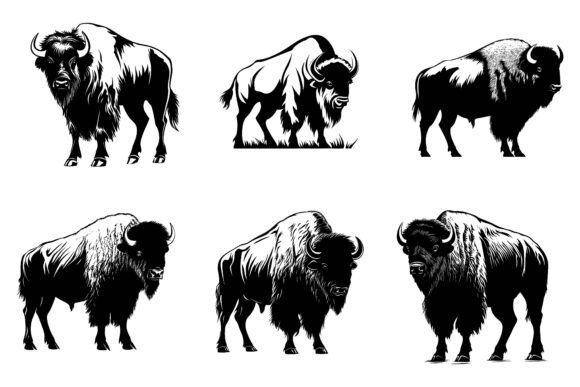
A silhouette strips an image down to its essential shape. With a bison, you get the distinctive hump, the heavy front quarters, the curved horns, and the solid stance. These features read instantly even at small sizes. In logo design, app icons, signage, and infographics, that immediate recognition matters. A well-crafted bison silhouette vector preserves those identifying contours without unnecessary complexity.
Designers often reach for wildlife silhouettes when they need to suggest strength, endurance, or connection to the American West. Conservation groups, outdoor brands, sports teams, and educational publishers all use bison imagery for these reasons. But the asset itself needs to hold up under different output requirements. A vector file built with attention to anchor points, smooth curves, and clean intersections will scale from a website favicon to a trade show banner without degrading.
File Formats and What They Mean for Your Workflow
The product includes three core formats: AI, EPS, and JPG. Each serves a distinct purpose in a production pipeline.
AI (Adobe Illustrator) files give you native editing capability. When you open the file in Illustrator, you can access every anchor point, path, and shape. This is where you adjust stroke widths, tweak horn curvature, or isolate specific parts of the silhouette for use as standalone elements. The AI format also preserves layer information, which becomes important when you need to separate the bison from a background or export specific components.
EPS (Encapsulated PostScript) offers broader compatibility. If you work across different vector editing applications—Affinity Designer, CorelDRAW, Inkscape—the EPS format ensures the graphic opens correctly. It also integrates with layout programs like InDesign and QuarkXPress, making it the go-to format for print projects where the bison silhouette vector needs to be placed into a larger composition.
JPG serves quick placement needs. You might drop the JPG into a presentation slide, a social media mockup, or a client email without needing vector editing software. It's ready to use immediately but lacks the scalability and editability of the vector formats. Having all three formats in one collection means you don't waste time exporting or converting files mid-project.
Organized Layers and the Time They Save
One of the most overlooked aspects of stock vector quality is layer structure. A file with unnamed, ungrouped, or flattened layers creates friction. You spend time hunting for the right object, ungrouping nested elements, or accidentally modifying parts you meant to leave untouched.
The bison silhouette vector collection described here uses a neatly organized file and layer structure. This matters when you need to:
- Separate the bison from a decorative background element
- Apply different color treatments to specific sections
- Export individual parts as independent assets for an app interface
- Hand off the file to a colleague who needs to understand the construction quickly
Well-named layers and logical grouping reduce the cognitive load of opening someone else's file. If you've ever inherited a design file with 47 unnamed paths, you understand the value of organization. For teams, this structure also supports version control and consistent usage across multiple projects.
Editing and Customizing the Bison Silhouette Vector
No stock graphic fits every project without modification. You might need the bison in brand colors, in a metallic gold for a certificate, in white reversed out of a dark background, or in a duotone treatment for an editorial spread. The ability to edit easily depends on how the original file was built.
A vector silhouette built with closed paths, minimal anchor points, and consistent stroke behavior responds predictably to color changes. You select the shape, pick a new fill color, and the entire silhouette updates. If the file uses compound paths intelligently, you can even punch out interior negative spaces—like the gap between the bison's legs or the curve under its chin—so background textures show through correctly.
More advanced edits might include:
- Adding a secondary color as an offset shadow or glow behind the silhouette
- Modifying the silhouette into a related animal by adjusting proportions
- Combining the bison with typographic elements for a logo lockup
- Creating a pattern repeat using rotated or scaled instances of the silhouette
Because the file includes AI format with preserved layers, these edits happen quickly. You aren't redrawing anything. You're working with what's already there and making it your own.
Print, Web, and Everything Between
The same bison silhouette vector works across completely different output types. For print, you need high resolution, CMYK color space control, and paths that won't cause rip errors at the press. For web and apps, you need clean SVG exports, small file sizes, and compatibility with screen-based color spaces like RGB or HEX.
One asset, properly built, handles both. You export from the same AI or EPS file to different formats as needed. For a print brochure, you might place the EPS directly into InDesign. For a website hero image, you export an SVG or PNG at the exact pixel dimensions required. For an infographic, you pull the bison into a layout tool and scale it alongside charts and text blocks.
Symbols and icons represent another use case. A simplified bison profile can serve as a navigation icon, a category marker, or a visual bullet point. Infographics benefit from silhouette vectors because they communicate concepts without photographs that might clash stylistically with data visualizations.
Cross-Platform Compatibility and Real-World Use
The collection is designed for both Mac and Windows users. This isn't a minor detail. File permissions, font embedding, and preview generation can behave differently across operating systems. An EPS generated on one platform may not display thumbnail previews on another. A well-prepared collection addresses these issues during file creation, not after the user discovers the problem.
For freelance designers moving between home and client offices, or for in-house teams with mixed operating systems, cross-platform compatibility prevents workflow interruptions. You download the files once and use them wherever the work takes you.
Applications Across Industries and Roles
Different professionals encounter different needs for a bison silhouette vector, but the underlying requirement is the same: a reliable, editable, high-quality graphic that integrates into their process without added friction.
Branding and identity designers might use the bison as a primary mark or a secondary brand element. The silhouette communicates values like resilience, heritage, and natural strength. Because vectors scale indefinitely, the same logo file works on business cards, website headers, embroidered apparel, and vehicle wraps.
Educators and publishers incorporate wildlife silhouettes into textbooks, worksheets, and digital learning platforms. A bison silhouette can illustrate lessons about plains ecosystems, Native American history, or conservation biology. The organized layer structure makes it easy to create variations—perhaps one version with labels pointing to anatomical features.
Small business owners in tourism, outdoor gear, ranching, or Western-themed hospitality use bison imagery in signage, menus, merchandise, and social media. Having an editable vector means they can adapt the graphic for seasonal promotions or new product lines without hiring a designer for every minor update.
App and web developers need crisp, lightweight assets for user interfaces. The bison silhouette can appear as a loading graphic, an achievement badge, or a category icon. Exporting from the vector source guarantees retina-ready sharpness at any resolution.
Content creators and marketers use silhouettes in blog post headers, video thumbnails, presentation slides, and downloadable resources. The consistent detail quality means the graphic looks professional regardless of context.
Quality Control and Long-Term Value
When a product description emphasizes perfection in details and consistency, it points to something specific in practice. Poorly traced silhouettes show jagged edges when scaled. Inconsistent line weights create visual wobble. Improperly joined paths cause fill issues or unexpected transparency gaps.
A well-made bison silhouette vector avoids these problems. The curves are smooth at any magnification. The proportions remain balanced whether the graphic stands alone or sits within a composition. This quality level matters more the longer you use the asset. A graphic you return to repeatedly across multiple projects justifies the attention paid to its construction.
Consistency also means the bison silhouette works harmoniously with other illustrations in the same collection. If you're building a set of wildlife icons for a park map or a field guide app, the stylistic uniformity across different animal silhouettes creates a cohesive visual system. Individual graphics don't compete with each other for attention.
Integrating the Bison Silhouette Vector Into Your Own Work
The practical path from downloading a vector file to using it in finished work varies by project, but some patterns emerge. Start by opening the AI file to understand the layer structure. Identify which layers contain the main silhouette and which contain supplementary elements. Duplicate the layer before making changes so you can always return to the original.
If you're working in a non-Adobe application, open the EPS version. Check that all paths import correctly and that colors map as expected. For print projects, verify the color mode and adjust if necessary. For web projects, switch to RGB and test the export at the target pixel dimensions.
Consider creating a small library of pre-edited versions for different use cases. You might have a solid black version for one-color printing, a white knockout version for dark backgrounds, and a brand-color version for marketing materials. Store these alongside the originals with clear file names so you don't have to re-edit repeatedly.
The layered structure also supports animation and motion graphics work. By separating the bison into foreground and background elements, or by isolating limbs for subtle movement, you can bring the static silhouette to life in video projects or interactive web experiences.
Making the Decision to Purchase and Implement
Stock graphics accumulate quickly. The ones that earn their place are the ones you actually use. A bison silhouette vector collection that combines AI, EPS, and JPG formats, organized layers, cross-platform readiness, and detail-oriented construction removes the obstacles that prevent implementation. You spend less time fixing the file and more time incorporating it into your work.
When you evaluate a vector illustration set, look past the preview image. Ask whether the files will open cleanly in your software. Consider whether you can change colors in seconds. Think about the range of projects where the graphic might serve you over the next year. A purchase becomes an investment when the asset flows through your pipeline without resistance.
The bison silhouette carries meaning. It evokes open landscapes, untamed strength, and enduring presence. When that image is backed by a file built for real-world use—organized, editable, multi-format, and platform-agnostic—you get something that moves from your downloads folder into your actual projects. That's the difference between collecting graphics and using them.