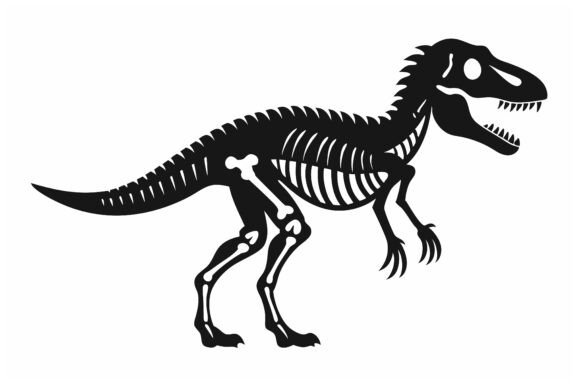
Integrating the Dinosaur Fossil AI EPS Illustration Set into Your Daily Creative Practice
Every designer, educator, or small business owner knows that a well-stocked toolkit saves hours of repetitive work. The Dinosaur Fossil AI EPS illustration collection delivers exactly that kind of practical resource. Instead of sketching prehistoric bone structures from scratch, you can immediately pull professionally crafted fossil graphics into your layout, branding project, or educational material. This set arrives as a neatly organized package of vector and raster assets, built for both Mac and Windows users who need flexibility and speed.
What the Dinosaur Fossil Pack Brings to Your Toolkit
When you download the collection, you aren’t getting a single static image. You receive three distinct variations of the dinosaur fossil motif, each available in high-quality AI, EPS, and JPG formats. This multi-format approach means you can start working in Adobe Illustrator, import vectors into tools like Affinity Designer or CorelDRAW, or drop ready-to-use JPGs into presentations without conversion hassles. The core value lies in how the set bridges the gap between raw creative ideas and finished deliverables.
- 3 unique fossil variations to support range in design while maintaining thematic cohesion.
- Editable AI and EPS source files with fully scalable vector paths.
- High-resolution JPG files for immediate placement in documents or online mockups.
- Organized layer and object structure that simplifies selection and styling.
- Consistent detailing across all files, ensuring no surprise alignment or stroke issues.
From Planning to Finished Product: Where Fossil Graphics Fit
Most projects move through distinct phases—concept development, asset gathering, layout construction, client review, and final export. The Dinosaur Fossil collection fits most naturally during asset gathering and layout, but its impact reaches further. Early on, you might use the JPG previews to drop a placeholder fossil into a storyboard or wireframe. During the design phase, the editable AI files let you refine line weight, adjust bone contours, or isolate individual parts for focused storytelling. In a museum exhibition poster, for instance, you can place the fossil as a centerpiece and then edit it to match an earthy brand palette. The result is a visual that feels original, not like a stock download everyone else uses.
Because the set includes variations, you avoid the monotony of repeating the same graphic across touchpoints. An educational workbook could use one fossil style for chapter headers, another for activity pages, and a third for a cover accent. This small shift in asset planning keeps the visual system fresh without extra design overhead.
Cross-Platform Compatibility and File Preparation
One of the quiet hurdles in creative workflows is format mismatch. A freelancer on a Windows machine may not share the same software version as a client on macOS. The collection’s dual AI and EPS vector formats remove that obstacle. AI files retain full Illustrator-native editing capabilities, while EPS files serve as a universal exchange medium that most professional graphic applications can open. The included JPGs offer a fallback for quick presentations or for embedding in web pages where vector scaling isn’t required.
Before dropping a fossil graphic into your workspace, open the EPS or AI file and confirm that all text is outlined and that linked resources are embedded. The provider has already structured the files to be self-contained, but this quick check eliminates downstream surprises. Because the assets are compatible with both major operating systems, you can hand off files to a remote team member or a print vendor without worrying about missing fonts or broken elements.
Streamlining Editing with a Clean Layer Structure
A well-organized Illustrator file saves far more time than a beautifully designed but flattened piece of art. The Dinosaur Fossil set emphasizes neat organization. When you open an AI file, you’ll immediately see intelligently named layers, grouped paths, and easily selectable sub-elements. You are not forced to redraw or painstakingly release compound paths to make simple changes.
Practical tip: use the layer panel to isolate the fossil outline, then apply a different stroke color for a duotone look. Or turn off certain bone groups to create a partial skeleton effect for an anatomy infographic. Because the layer structure is clean, you can also animate individual bones in After Effects by importing each layer as a separate composition element. This level of editable depth transforms a static illustration into a flexible component that can adapt to motion graphics, interactive web designs, or explanatory slides.
Adapting Colors and Shapes for Branded Projects
Every brand has its own color language. A fossil graphic that only looks good in its default palette limits your design possibilities. The vector nature of this collection means you can recolor any part without sacrificing sharpness. Select the bone paths and apply your brand’s primary color in two clicks. For a natural history blog, you might go with sepia tones. For a children’s app, bright, playful hues can redefine the fossil as a friendly character.
The ability to modify the icon itself goes beyond color. You can adjust individual anchor points to match a specific dinosaur species or to stylize the bone thickness. This adaptability makes the pack useful not just as a one-off decorative element but as a foundation for a whole set of branded visual assets. A publisher creating a dinosaur-themed educational series could tweak the fossil across multiple covers, keeping a recognizable style while differentiating each title.
Quality Control: Consistency Across All Variations
One of the standout features of this collection is the attention to detail and consistency. All three fossil variations share the same line weight, level of intricacy, and overall proportion logic. When you place them side by side on an infographic or a comparative timeline, they visually belong together. There is no jarring shift in complexity that subconsciously distracts a viewer.
This consistency extends to how each graphic behaves under scaling. Whether you need a small icon for a mobile app badge or a large-scale museum banner, the paths remain sharp. Test the files at extreme sizes early in your workflow to confirm that stroke weights still read well. Because the set is built with precise, clean lines, you won’t encounter odd anti-aliasing artifacts or broken curves at high zoom levels.
Use Cases: Print, Web, Infographics, and App Interfaces
The phrase “suitable for print, web, symbols, apps, infographics” isn’t empty marketing language; it describes a genuinely flexible asset. Here are some practical integration paths:
- Print collateral: Embed the EPS fossil in a brochure about natural science, or use it as a chapter divider in a book. Scale to fit full bleed without pixelation.
- Web and digital media: Export the AI graphic as an SVG for responsive websites. Adjust colors via CSS or inline styles if you embed the SVG code directly.
- Infographics: Pair the fossil with data points about dinosaur eras. Use the JPG for quick Canva layouts or PowerPoint slides when vector editing isn’t needed.
- Symbols and icons: Reduce the fossil to a simple silhouette and use it as a custom icon font or UI symbol for a paleontology-themed app. The organized layers make isolating a silhouette easy.
Each context demands a slightly different file format and scale, and the multi-format delivery already anticipates that need. You won’t waste time hunting for a converter or re-exporting from a master file because the right format sits ready in the download folder.
Long-Term Usability and Workflow Efficiency
Well-built design resources become more valuable over time. A fossil graphic you download today could reappear in a social media post next month, a client presentation next quarter, or a side project next year. Because the files are editable and non-destructive, you can return to the original AI layout and quickly generate a new variation without starting over. This reusability aligns with a sustainable creative workflow that prioritizes assets you can grow with rather than throwaway graphics.
The organizational standards applied to this set also support team workflows. When you share the AI file with a colleague, they won’t need a long onboarding explanation. The layer naming convention and grouped objects are intuitive enough to jump into. This cuts down the friction of collaborative projects, especially when deadlines are tight and communication time is limited.
For those who manage large asset libraries, consider storing the collection in a cloud folder with a clear naming convention: “DinosaurFossil_Set_V1.” Tag the files with keywords like “prehistoric,” “skeleton,” “education,” “infographic” so they surface in your search tool months later. The small upfront effort of proper storage multiplies the pack’s long-term value.
If you find yourself repeatedly building fossil-themed layouts from scratch, the shift to using this pre-built, editable resource will change how you estimate project timelines. Instead of allocating a half-day to illustrate a credible bone structure, you can set aside thirty minutes for positioning, recoloring, and fine-tuning—a significant efficiency gain that compounds across multiple deliverables.
The dinosaur fossil illustration set effectively serves as a micro-investment in your design efficiency. The combination of three variations, cross-platform compatibility, meticulous organization, and easy customization makes it a sensible addition for anyone who regularly works with educational content, natural history themes, or simply wants a high-quality skeletal graphic that doesn’t lock them into a single look. When you’re ready to strengthen your visual library with assets that adapt to your process—not the other way around—this collection offers a straightforward, practical solution that fits directly into how you actually work.