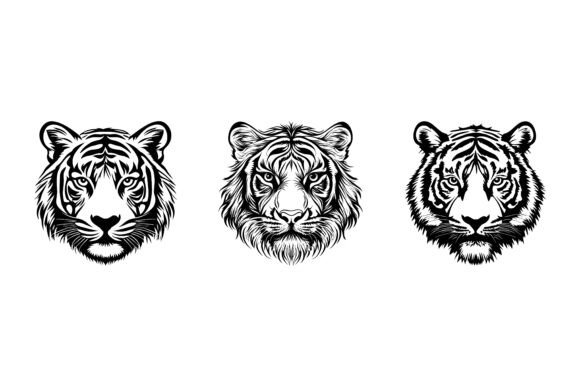
Set of Tiger Face: Your Go-To Visual Asset for Impactful Storytelling
Sometimes a single image can transform a project from forgettable to fierce. That's the feeling many designers and creators experience when they start working with a well-crafted Set of Tiger Face. It's not merely a graphic file. It's a gateway to expressing strength, independence, and raw natural beauty in everything you create. Whether you're building a brand identity or crafting a heartfelt personal gift, the right tiger illustration carries emotional weight that stock photography often misses.
This particular set arrives as a thoughtful Ai EPS collection, ready for Mac and Windows users alike. What sets it apart is how naturally it slides into your existing workflow without technical friction. You aren't wrestling with confusing layers or poorly named assets. Instead, you open a file that feels like someone already understood your creative process and prepared everything accordingly. The result means less time troubleshooting and more time designing.
When a Tiger Face Becomes More Than Decorative Art
We often underestimate how deeply animals resonate with human psychology. A tiger face specifically carries associations of courage, focus, and protective energy. Designers working on sports team branding reach for tiger motifs regularly because they tap into these primal feelings instantly. A youth basketball league might use one variation for their jerseys while a martial arts studio adapts the same artwork for wall graphics and membership cards. The versatility of the Set of Tiger Face lies in how easily you can shift colors and proportions to match vastly different tones — everything from playful mascot energy to sleek corporate fierceness.
Apparel is another arena where these illustrations shine. Streetwear brands in particular crave bold, graphic statements that feel slightly dangerous yet sophisticated. By opening the AI file, a designer can isolate the tiger's eyes or jawline, enlarge it beyond recognition, and suddenly have a completely abstract pattern that still whispers its origin. That creative flexibility matters enormously when you're trying to build seasonal collections around a consistent theme without simply repeating the same artwork repeatedly.
Real-World Scenarios Where Organized Assets Save Hours
Anyone who has inherited a messy vector file knows the frustration. Layers named "Path 142" or "Group 98" tell you nothing about what's inside. The neatly organized structure of this set becomes most valuable under tight deadlines. Picture a marketing team preparing a campaign launch at 9 PM. They realize the hero graphic needs to be adapted for Instagram Stories, a square format, and a wide billboard — all by morning. With properly named layers and logical grouping, moving elements around, resizing, and recoloring doesn't eat up precious mental energy deciphering the file architecture.
Print production brings its own demands too. CMYK compatibility, clean outlines, and scalable vector paths are non-negotiable when you're outputting for banners or business cards. The inclusion of both AI EPS vectors and a ready JPG means you can quickly drop previews into presentations without opening Illustrator, then switch to the vector source when pixel-perfect output matters. This isn't just convenient — it prevents errors where someone mistakenly uses a low-resolution preview for final printing.
Who Really Benefits From These Illustrations?
Graphic designers form the obvious audience, but the real-world user base continues to expand. Consider a wildlife conservation nonprofit preparing educational materials. They need visuals that strike a careful balance between eye-catching appeal and respectful representation. Editing the Set of Tiger Face lets them adjust warmth, soften edges for younger audiences, or enhance contrast for visually impactful posters without commissioning custom illustrations at every turn.
Small business owners selling on platforms like Etsy or Shopify also find enormous value here. Someone creating printable wall art, planner stickers, or digital scrapbooking elements can take one base illustration and generate dozens of variations through color changes and cropping. The ability to modify both colors and shapes so easily allows a small product catalog to appear much more extensive than it actually is. A single purchase turns into multiple listing-ready products.
Event planners and stationery designers make surprising use of animal illustrations too. A jungle-themed baby shower, a corporate retreat for a company whose mascot is a tiger, or even packaging for spicy food products — all become opportunities to integrate a well-crafted tiger face in ways that feel custom and deliberate.
Working Across Platforms Without Restrictions
The digital divide between operating systems still causes headaches for creative teams. A Windows-based designer and a Mac-based client can fall into translation problems where files behave differently when opened. Providing both AI EPS and JPG formats intentionally bridges that gap. The EPS format handles cross-platform vector needs reliably, while the JPG provides immediate compatibility with virtually any software for quick mockups or social media scheduling.
Infographics present another common use case. Data visualization teams often need strong visual anchors to draw attention to key statistics. A tiger face can signify "top performer" metrics or highlight competitive rankings in corporate presentations. When even infographic icons can be edited and recolored, the same visual language can persist through an entire reporting suite, creating a polished, integrated feel across multiple documents.
Creative Decisions Before You Start
Before you open the file and start transforming shapes, pause to consider context. How much stylization fits your audience? A hyper-realistic eye might captivate on a poster but overwhelm when reduced to an app icon size. The built-in consistency of this set helps because you can test different complexity levels within the same illustration family without style clashes.
Color psychology deserves attention too. Orange and black feel traditional for tiger imagery, but muted teal or monochromatic charcoal treatments completely change the emotional register. Restaurants wanting earthy warmth, fitness brands craving high-energy neon accents, and luxury brands exploring gold-on-black palettes can all work from the same source material with dramatically different outcomes.
Consider also the cultural context. In many traditions, tigers represent guardianship and good fortune. Asian markets especially respond to tiger imagery during Lunar New Year celebrations and other cultural moments. Having editable vector art means you can incorporate specific symbolism without appropriating — you're thoughtfully adapting rather than clumsily copying traditional artwork.
Why Consistency in Details Matters Over Time
Brands don't stay static. They evolve visually across months and years. When you begin with an illustration set that emphasizes perfection in details and consistency, subsequent redesigns become smoother. You aren't constantly reestablishing visual rules. The underlying structure — stroke weights, curve quality, facial proportions — provides a stable foundation even as superficial elements like color or composition change dramatically.
Web developers building interactive experiences also value this predictability. SVG exports from AI files maintain crisp rendering at any screen size. A tiger face used as a hero illustration on a website homepage can later become a loading animation, a favicon, or an interactive hover state element. The scalable vector nature ensures each implementation looks intentional rather than squeezed or pixelated.
Consistency proves especially important for multi-designer environments. Agencies where multiple creatives touch the same project benefit from standardized layers and naming conventions. When someone else needs to pick up where you left off months later, they can find the specific element they need without rebuilding from scratch.
Practical Observations From Daily Users
Experienced designers often note that the real test of any vector set comes when you push it into unintended contexts. Maybe you need to animate a tiger's eye blinking for a short video clip. The structured layers make isolating eyelid shapes straightforward. Perhaps you want to create a continuous pattern for fabric printing, repeating tiger silhouettes endlessly without visible seams. Clean edges and well-drawn paths make tessellation possible without hours of manual cleanup.
Social media managers frequently mention speed as the deciding factor. Trends emerge quickly. A news cycle, holiday, or viral moment demands immediate visual responses. Having a ready-to-adapt Set of Tiger Face means you can react within minutes — change the expression slightly, adjust context, add a message — and publish while the conversation still matters.
Limitations exist naturally. No single illustration set covers every conceivable angle or emotional nuance. But for the majority of commercial and personal projects, the range of expression within a focused tiger face collection exceeds what most users need. The key is recognizing when modification serves your purpose versus when a completely different subject matter would work better. Sometimes, though, the limitations themselves spark creativity. Working within a defined visual language often produces stronger results than unlimited options.
Moving From Purchase to Project
Once the files download, the actual workflow tends to surprise first-time users with how immediately productive it feels. You open the AI file, see logical groupings, and within minutes you have something customized that barely resembles the original preview — yet maintains professional polish. That satisfaction translates directly into confidence. You show up to client meetings with flexible assets, not static images you're afraid to touch.
For print shops, sign makers, and promotional product companies, these illustrations slip into production pipelines without extra steps. Direct embroidery digitization, screen printing separation, and laser engraving all start with clean vector sources. The fewer touchpoints needed before manufacturing, the fewer opportunities for costly errors.
So whatever your project demands — web hero graphics, app symbols, infographic accents, or full print campaigns — consider how much easier everything becomes when the core illustration already meets professional standards and reshapes itself around your needs rather than the other way around. Buy now and start using this awesome illustration in ways perhaps even its creators didn't anticipate. Your next design breakthrough might just begin with a single, perfectly structured tiger face.