The Cruise Ship Captain Cartoon Illustration as a Strategic Visual Asset
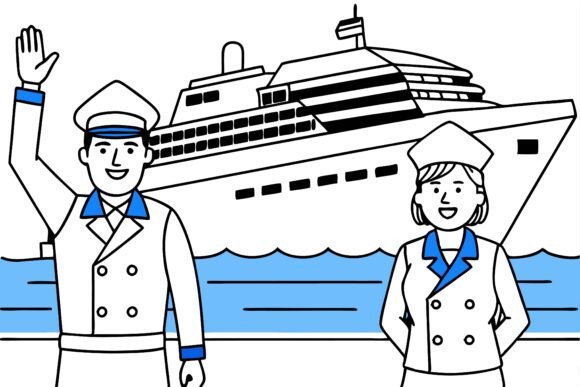
Every visual element you place in front of an audience carries unspoken weight. A cruise ship captain cartoon illustration isn’t just a friendly graphic; it’s a strategic shorthand for leadership, direction, hospitality, and exploration. When used thoughtfully, it can anchor brand stories, simplify complex messages, and build a recognizable thread across diverse media. This kind of illustration becomes especially powerful when it’s delivered as a meticulously structured vector set—ready to edit, recolor, and repurpose without losing professional polish.
Professionals who choose such assets often do so because they understand that visual consistency impacts trust, and flexibility determines how well a concept scales. Whether you’re steering a marketing campaign, developing educational materials, or refining an app’s onboarding flow, the decisions you make around character illustrations should be grounded in purpose, not whimsy. Let’s walk through what makes this specific illustration archetype valuable and how to integrate it into your work with intention.
Why Character Consistency Shapes Audience Perception
People process cartoon-style imagery faster than photography. A well-crafted captain character can humanize a brand, convey authority without being intimidating, and trigger associations with reliability, adventure, and service. The strategic value multiplies when the illustration set maintains perfection in details and consistency across poses, angles, and contexts. This isn’t about decoration; it’s about building a visual language that reduces cognitive load for your audience.
Consider how a recognizable captain figure might appear in an app onboarding screen, then later on a printed brochure or a blog header. When the line weight, color palette, and styling remain uniform, you strengthen brand recall. The fact that this particular illustration set is neatly organized with a clear file and layer structure means you can pull individual elements apart, adapt them to new compositions, and still maintain that coherence. That kind of control supports long-term branding much more effectively than one-off stock images that force you into inconsistent visual territory.
Strategic Scenarios Where the Captain Illustration Drives Results
You don’t always need a literal nautical theme to benefit from this graphic. The captain archetype works well whenever your message revolves around guidance, journey, management, or destination-focused thinking. Here are some practical use cases where intentional placement of the cruise ship captain cartoon illustration can strengthen communication:
- Service-oriented landing pages that want to convey stewardship and trust before a purchase decision.
- Internal training modules where a consistent character leads employees through procedures, reducing the monotony of bullet points.
- Infographics and annual reports that break down data with a relatable narrator, making statistics feel less sterile.
- Customer onboarding emails where the captain greets new users and guides them step by step, reinforcing a feeling of being looked after.
- Event branding for conferences or retreats centered on leadership, innovation, or navigating change.
In each case, the illustration works because you’ve assigned it a clear narrative role. Random placement without strategic intent, however, dilutes its effect and can even confuse your audience about what you’re trying to say.
When to Choose an Editable Vector Set Over a Static Image
Many decision-makers underestimate how much they’ll need to tweak artwork after purchase. A flat JPEG locks you into predetermined colors, sizes, and backgrounds. In contrast, the included AI, EPS, and JPG formats of this illustration give you both immediate web-ready files and fully editable vector source files. The ability to change colors and modify the icon easily isn’t a minor convenience—it’s a strategic necessity for anyone who values brand alignment.
Imagine you’re a small business owner whose brand palette shifts during a rebranding. You don’t want to scrap a beloved character that audiences already recognize. With layered, editable vectors, you can recolor the captain’s uniform, adjust stroke weights, or isolate elements like a ship’s wheel for use in a logo lockup. This flexibility extends the asset’s useful life far beyond a single campaign, making it a smarter long-term investment than cheaper but rigid alternatives.
Planning Your Visual Narrative Before You Customize
Jumping straight into editing without a plan often leads to visual inconsistencies that cheapen the output. Before you open the file, clarify a few fundamental questions:
- What single core idea does the captain need to represent in this specific context?
- Which platforms will display this illustration, and what sizes and proportions matter most?
- How will the illustration interact with your existing typography, whitespace, and other graphics?
- Do you need to maintain the same character style across multiple pieces of collateral?
Answering these questions transforms the cruise ship captain cartoon illustration from a generic icon into a purposeful asset. For instance, if you’re a creator building an online course about leadership, you might decide to use the captain in a consistent lower-left position on slides, always facing the content. That subtle repetition signals structure. If you’re a marketer, you might create three variations—welcoming, navigating, and celebrating—to map onto different stages of the customer journey. The organized layer structure makes these variations easy to produce without redesigning from scratch.
Customization as a Trust-Building Tool
One often-overlooked advantage of editable illustrations is the ability to add brand-specific details. Maybe your company’s value proposition involves sustainable tourism; you could tint the captain’s uniform with eco-friendly green accents. Maybe your product simplifies complex logistics; you can strip away decorative elements and pair the captain with simple journey maps. These small customizations send a signal that your content was created with care, not assembled from off-the-shelf parts. Audiences, particularly those in professional and B2B contexts, notice that level of refinement.
Because the file is designed for Mac and Windows users with a clean structure, your team—whether freelance designers or in-house staff—can collaborate without friction. This reduces production bottlenecks and allows faster iteration when you’re testing which visual treatment resonates best with your audience.
The Hidden Risk of Using Character Illustrations Without Clear Goals
Even the most charming cartoon captain can backfire when used carelessly. A common mistake is deploying character illustrations as mere filler—decorating a weak message instead of strengthening a strong one. When the captain appears on a page with no connection to the surrounding content, it undermines professional credibility. Another risk is overuse: saturating every touchpoint with the same figure can shift from memorable to annoying, especially if the character’s context never evolves.
To avoid these traps, always return to audience needs. Ask whether the captain clarifies a concept, reduces anxiety about a complex process, or makes an interaction feel more human. If the answer is unclear, you might need a different visual approach. The goal isn’t to use the illustration everywhere possible, but to use it where it genuinely improves understanding or connection.
Long-Term Value of a Well-Structured Illustration Asset
When you look beyond a single project, a versatile vector illustration set becomes a reusable component of your brand toolkit. The cruise ship captain cartoon illustration can support seasonal promotions, product launches, webinar slides, social media series, and even internal culture materials—all while retaining a consistent visual thread. The value compounds because you’re not reinventing your visual vocabulary each quarter. Teams save time, budgets stretch further, and your audience builds familiarity that fosters loyalty.
Additionally, having the source files in AI and EPS formats means you aren’t locked into a specific resolution. You can output crisp graphics for a billboard or scale down for a favicon. In a world where brands must perform across an ever-growing array of screen sizes and print formats, that scalability is non-negotiable. The neatly organized layer structure ensures that future edits, even by different designers, remain fast and error-free.
Integrating the Captain into Your Content Ecosystem
A truly strategic deployment considers how the illustration connects with other content elements. For example, a publisher might use the captain as a recurring character in blog post headers for a series on navigating regulatory changes. An app developer might pair the captain with interactive elements, using the character’s pointing gesture to direct users toward a call-to-action. These choices work because they stem from a content strategy, not random decoration.
You might also apply the captain in non-obvious ways—for instance, in a physical workspace as part of wayfinding signage or printed team handbooks. The consistency of the artwork across digital and physical realms reinforces your identity. The ability to export high-quality JPGs for quick use while preserving editable vectors for complex projects gives you the speed and precision needed in fast-moving environments.
Making the Decision to Invest in Purpose-Driven Imagery
Choosing an illustration should never be an afterthought. The cruise ship captain cartoon illustration stands out because it combines a universally understood symbol with the technical quality needed for real-world demands. It’s suitable for print, web, symbols, apps, and infographics—a breadth that many standalone assets lack. More importantly, it’s built for professionals who ask, “How can this visual help me achieve a specific outcome?” rather than “What looks cute?”
Before you finalize any visual purchase, confirm that the asset’s structure supports your workflow. This set’s cross-platform compatibility, editable layers, and organized file system mean you can adapt it under tight deadlines without sacrificing quality. That practical foundation lets you focus on strategic decisions—storytelling, audience engagement, and brand alignment—rather than wrestling with file limitations.
Ultimately, the value of any illustration depends on the clarity of your intent. When you pair a thoughtful strategy with a flexible, well-crafted visual tool, the captain doesn’t just decorate your work. It helps steer perception in the direction you’ve chosen, quietly reinforcing the trust and professionalism that set your projects apart.